
In the industrial sector, innovation has always played a pivotal role in improving productivity and efficiency. With technological advancements, manufacturing processes have evolved, and one such process is automated welding. Automated welding, often referred to as robotic welding, involves the use of mechanized programmable tools to execute welding tasks. Such systems have become increasingly popular due to their ability to enhance precision and productivity.
However, like any technology, the implementation of automated welding brings both advantages and challenges that need careful consideration.
The adoption of robotic welding stems largely from the demand for higher quality and greater consistency in production. Traditional welders, though highly skilled, can introduce variability simply because of the human factor. Robotic systems, on the other hand, are designed to minimize such inconsistencies by maintaining precision. This consistency directly translates into products of uniform quality, which is a significant concern for manufacturers. Nonetheless, while the precision of robotic welding is a major advantage, it might not always match the nuanced skill of a highly experienced human welder.
Furthermore, the global market for robotic welding is witnessing significant growth. Both developed and developing nations are investing in automation to enhance their industrial capabilities. With increasing demand for products and a shortage of skilled labor in many regions, robotic welding offers a viable solution. Despite its promising prospects, companies must weigh the benefits against the potential drawbacks. Moreover, understanding the unique requirements of different industries is crucial to effectively implement automated welding systems.
Benefits of Automated Welding
One of the foremost benefits of automated welding includes the improvement in welding speed and production rates. Robotic systems operate continuously with minimal downtime, unlike human workers who require breaks. This capability significantly enhances the efficiency of production lines. Consequently, companies can reduce lead times and meet customer demands more effectively. Additionally, the use of precise robotics ensures that the amount of welding material used is optimized, yielding cost savings.
Another major advantage is the improvement in workplace safety. Welding is inherently a high-risk job with exposure to high temperatures, gases, and intense light. By using robotic welding systems, human workers are removed from hazardous environments, reducing the potential for accidents. These safety improvements can also decrease regulatory expenses and boost company morale. Ultimately, saving human lives and limb by separating personnel from dangerous environments represents a significant achievement.
The enhancement of weld quality and durability is yet another advantage associated with robotic welding. With the ability to achieve consistent and repeatable results, product reliability improves. In industries where precision and weld integrity are critical, such as aerospace and automotive sectors, this becomes a vital factor. Furthermore, advanced robotics often come equipped with diagnostic and analytics capabilities to monitor welder performance in real-time. This feature allows for immediate adjustment and consistently high-quality results.
Drawbacks of Automated Welding
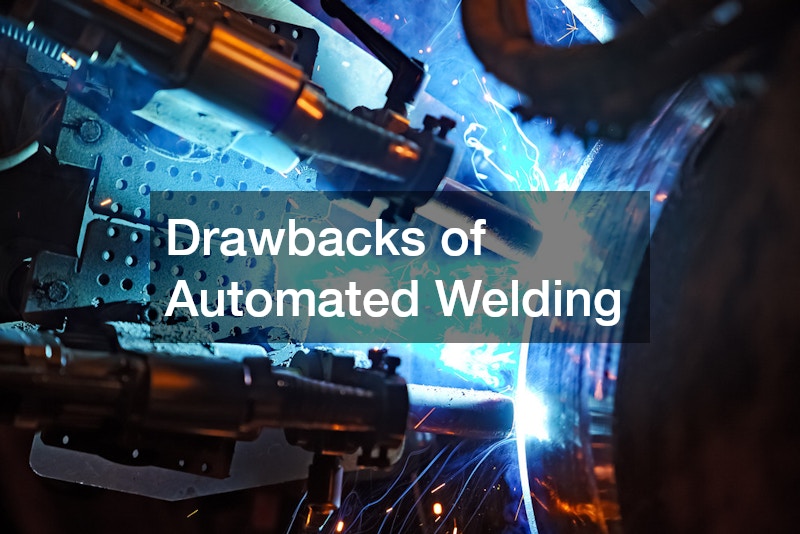
Despite the many advantages, there are notable drawbacks to consider with automated welding systems. Significant initial investment is one major barrier for many small to medium-sized enterprises. High costs associated with purchasing and installing robotic systems can be daunting. Additionally, ongoing maintenance and potential repairs can add to the long-term expenses. For smaller operations with lower production volumes, such costs may not be justifiable.
Another challenge is the rigidity and limited flexibility often found in robotic welding systems. Human welders, with their adaptability and decision-making capabilities, can handle complex or unexpected changes during the welding process. Robotic welding systems, while precise, are often restricted to pre-programmed tasks and may struggle with specialized or intricate tasks requiring human intervention. This limitation can lead to bottlenecks if unexpected changes in production requirements occur.
Finally, the implementation of robotic welding may also lead to job displacement. As automation takes over tasks previously done by humans, there is a legitimate concern about reduced employment for traditional welders. However, it’s also notable that robotics might create new job opportunities in programming and maintenance. The key will be to provide adequate training and transition programs for the workforce. Balancing automation with human skills remains a critical challenge for industries.